
 ENG
ENG
 English
 русский
 Español
In the world of fluid power, the hydraulic pump is often referred to as the “heart” of the system. Selecting the right pump technology is not just about moving fluid; it’s about optimizing energy consumption, reducing downtime, and maximizing the return on investment (ROI) for your industrial machinery. When comparing Gear, Vane, and Piston pumps, the term “efficiency” takes on multiple layers, including volumetric efficiency, mechanical efficiency, and overall lifecycle cost.
1. Gear Pumps: The Durable and Cost-Effective Workhorse
External gear pumps are the most widely used displacement pumps in industrial hydraulic systems. Their design consists of two meshing gears—a driver and a driven gear—housed within a precision-machined casing. As the gears rotate, they create a vacuum at the inlet, drawing fluid in and carrying it around the outer housing to the discharge port.
The Efficiency Profile of Gear Pumps
While gear pumps are celebrated for their simplicity, they generally offer the lowest volumetric efficiency among the three types, typically ranging from 80% to 90%. This is primarily due to “internal leakage” or “slip,” where pressurized fluid escapes through the small clearances between the gear teeth and the housing.
Advantages in Specific Industrial Scenarios
- Contamination Tolerance: In rugged manufacturing environments where fluid purity is hard to maintain, gear pumps excel. Their robust design handles particles better than high-precision piston units.
- Fixed Displacement Reliability: For applications requiring a constant flow at steady speeds, such as cooling loops or simple lubrication systems, the gear pump is the most economical choice.
- Low Maintenance Requirements: With fewer moving parts, the mean time between failures (MTBF) is often superior in low-pressure setups.
Limitations to Consider
The efficiency of a gear pump degrades as the internal surfaces wear down. High-pressure spikes can cause the gears to push against the housing, increasing friction and reducing mechanical efficiency. For systems operating consistently above 3,000 PSI, the energy loss often outweighs the initial savings of the hardware.
2. Vane Pumps: The Balanced Solution for Quiet Operations
Vane pumps represent a middle ground in the hydraulic spectrum. They utilize a slotted rotor with several sliding vanes that follow the inner contour of a cam ring. As the rotor spins, centrifugal force (and often hydraulic pressure) pushes the vanes outward to create a tight seal against the ring.
Understanding Vane Pump Efficiency Dynamics
Vane pumps typically achieve a volumetric efficiency of 85% to 92%. What makes them unique is their “self-compensating” nature. As the tips of the vanes wear down over time, they simply slide further out of the rotor slots to maintain the seal. This allows the pump to maintain a relatively high efficiency throughout a larger portion of its service life compared to a gear pump.
Key Performance Drivers
- Quiet Performance: Vane pumps are significantly quieter than gear or piston pumps, making them the preferred choice for indoor factory environments where noise pollution regulations are strict.
- Balanced Design: High-end vane pumps often feature a “balanced” design, where two internal pressure chambers are placed opposite each other. This cancels out side loads on the shaft and bearings, extending the pump’s life and maintaining mechanical efficiency.
- Medium Pressure Capability: They are ideal for plastic injection molding machines and medium-duty machine tools.
Critical Maintenance Factors
Vane pumps require a higher level of fluid cleanliness than gear pumps. If the hydraulic oil becomes contaminated, the vanes can stick in their slots, leading to a catastrophic drop in pressure and efficiency. Proper filtration is essential to protect the “vane-to-cam” contact point.
3. Piston Pumps: The Gold Standard for High-Performance Power
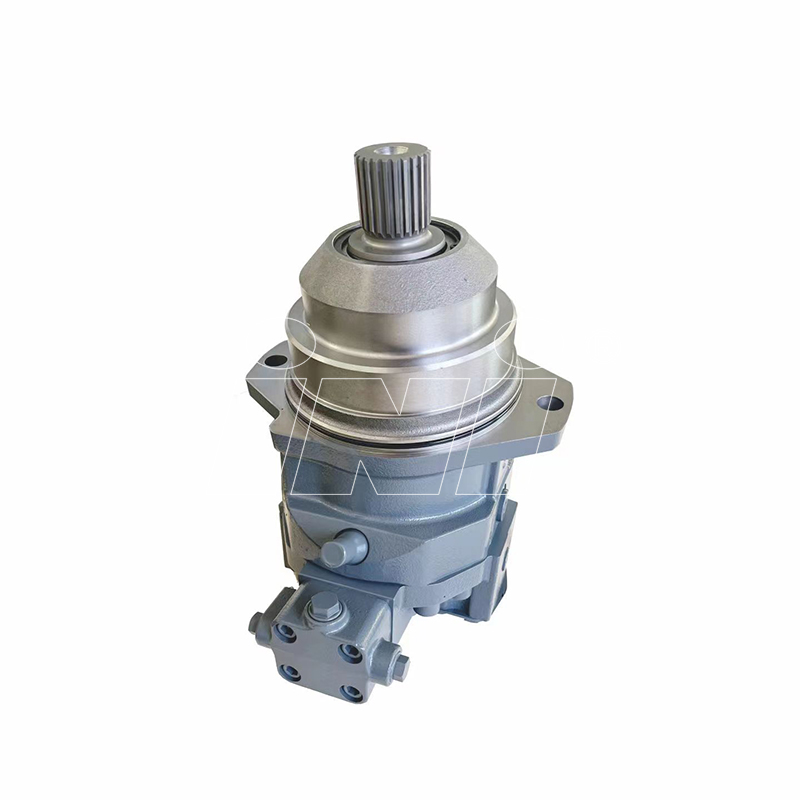
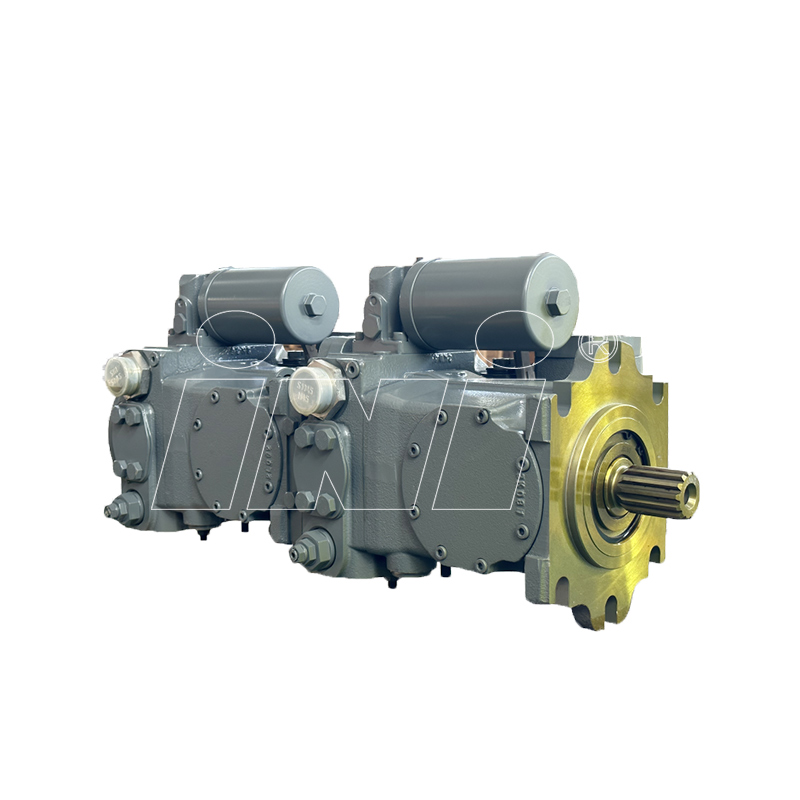
For high-pressure, high-cycle, and high-efficiency requirements, the piston pump is the undisputed leader. Whether in an axial or radial configuration, these pumps use reciprocating pistons to move fluid. The precision fit between the pistons and the cylinder block allows for the tightest seals in the industry.
Why Piston Pumps Lead in Efficiency
Piston pumps can achieve volumetric efficiencies as high as 95% to 98%. Because they are built to extremely tight tolerances, internal leakage is minimized even at extreme pressures (often exceeding 5,000 to 7,000 PSI).
Variable Displacement and Energy Savings
The most significant efficiency advantage of a piston pump is its ability to be a Variable Displacement Pump. By adjusting the angle of the “swash plate,” the pump can change the volume of fluid it moves per revolution.
- Load Sensing: In modern industrial systems, the pump only provides the flow and pressure that the load actually requires.
- Waste Heat Reduction: Since the pump isn’t forcing excess oil through a relief valve, the system generates much less heat, saving significantly on cooling costs and electrical consumption.
The Cost-Efficiency Trade-off
While the piston pump offers the best performance, it comes with a higher initial price tag and requires a sophisticated filtration system (often 10 microns or better). However, for heavy-duty industrial presses, mobile construction equipment, and steel mill applications, the energy savings over a year of operation often pay for the pump’s premium cost.
Technical Comparison of Industrial Hydraulic Pumps
| Performance Metric | Gear Pump | Vane Pump | Piston Pump |
|---|---|---|---|
| Volumetric Efficiency | 80% - 90% | 85% - 92% | 95% - 98% |
| Max Pressure Range | Up to 3,000 PSI | Up to 4,000 PSI | Up to 10,000 PSI |
| Displacement Type | Fixed | Fixed / Variable | Fixed / Variable |
| Noise Level (dB) | 80 - 100 (High) | 60 - 75 (Low) | 70 - 90 (Medium) |
| Relative Cost | $ (Low) | $$(Medium) | $$$ (High) |
FAQ: Common Questions on Hydraulic Pump Selection
Which pump is best for energy saving?
The Piston Pump is the best choice for energy saving, especially when used in a variable displacement configuration. Its ability to match output to demand reduces wasted energy and heat generation.
Can I replace a gear pump with a piston pump to increase efficiency?
Yes, but it requires a system evaluation. Piston pumps are less tolerant of dirt, so you may need to upgrade your filtration system and potentially adjust your mounting and piping to handle higher pressure capabilities.
Why is my hydraulic pump losing efficiency over time?
The most common cause is internal wear. As surfaces erode due to friction or contamination, internal clearances increase, allowing fluid to leak from the high-pressure side back to the low-pressure side.
Does fluid viscosity affect pump efficiency?
Absolutely. If the oil is too thin (low viscosity), internal leakage increases. If it is too thick (high viscosity), the pump has to work harder to move the fluid, decreasing mechanical efficiency.
References & Technical Citations
- ISO 4409: Hydraulic fluid power — Positive-displacement pumps, motors and integral transmissions — Methods of testing and presenting basic performance data.
- W. Backé, “Design and Calculation of Hydraulic Systems,” Institute for Fluid Power Drives and Controls.
- NFPA (National Fluid Power Association) - Fluid Power Standards and Energy Efficiency Guidelines.

 English
 русский
 Español
 TOP
TOP