
 ENG
ENG
 English
 русский
 Español
In the competitive landscape of modern manufacturing, the Industrial Hydraulic Pump is the “heart” of any fluid power system. However, for B2B procurement managers and facility engineers, the greatest challenge lies in choosing between the three primary architectures: Piston, Vane, and Gear.
By 2026, as energy prices and maintenance labor costs continue to rise, the criteria for “Best ROI” (Return on Investment) is no longer determined solely by the initial purchase price. Instead, it is a comprehensive calculation of energy efficiency, service life, and system downtime.
1. Gear Pumps: The Low-Cost Workhorse for Simple Applications
When most people think of a standard Industrial Hydraulic Pump, they envision the External Gear Pump. Due to its simple construction—consisting of two meshing gears rotating within a housing to move fluid—this design has become the most widely used choice. From an ROI perspective, gear pumps offer the lowest entry barrier, making them ideal for budget-conscious projects or auxiliary hydraulic systems.
Advantages in Harsh Environments
The primary strength of the gear pump lies in its exceptional robustness. Compared to piston pumps, gear pumps have fewer moving parts and larger internal tolerances, making them remarkably resistant to fluid contamination. In industries such as waste management, basic construction, or agricultural machinery where maintaining extreme oil purity is difficult, gear pumps continue to function long after more delicate precision pumps have failed. This “durability” significantly reduces the cost required for advanced pre-filtration systems.
Limitations and Efficiency Trade-offs
However, the low initial cost often comes with an “efficiency tax.” Gear pumps are typically Fixed Displacement units, meaning they discharge a constant volume of oil regardless of the system’s actual demand. This leads to significant energy waste, as excess high-pressure oil must be vented back to the reservoir via relief valves, converting energy into useless heat. Furthermore, as the gears wear, internal leakage (volumetric loss) gradually increases. If your factory runs 24/7, the electricity wasted by an inefficient gear pump may exceed the cost of purchasing a more expensive high-efficiency pump within just 18 months.
2. Vane Pumps: The Balanced Choice for Noise and Smoothness
Vane Pumps represent the middle ground of the hydraulic world. They utilize a series of vanes sliding within a rotating rotor, creating chambers of varying volumes to suck in and expel oil. For indoor factory environments, such as Injection Molding or precision machine tool lubrication systems, vane pumps are often the preferred choice due to their superior acoustic profile.
Whisper-Quiet Operation and Maintainability
High-quality industrial vane pumps operate significantly quieter than gear or piston designs. This is a critical factor for complying with OSHA noise regulations and improving the working environment for factory employees. Additionally, many modern vane pumps utilize a “Cartridge Design.” When internal components wear out, maintenance teams can simply replace the central cartridge without removing the entire pump body from the machinery. This design drastically shortens the Mean Time to Repair (MTTR), reducing labor costs and system downtime—a direct boost to your overall ROI.
Efficiency and Pressure Limits
In terms of volumetric efficiency, vane pumps outperform gear pumps because the vanes are “self-compensating”—centrifugal force and hydraulic pressure push the vanes outward to maintain a tight seal against the stator, even as they wear. However, they are generally limited to medium-pressure applications (typically below 210 bar / 3,000 PSI). If your industrial process requires extreme force or high-cycle precision control, a vane pump may lack the heavy-lifting capabilities of a piston architecture.
3. Piston Pumps: High-Pressure Precision and Maximum ROI
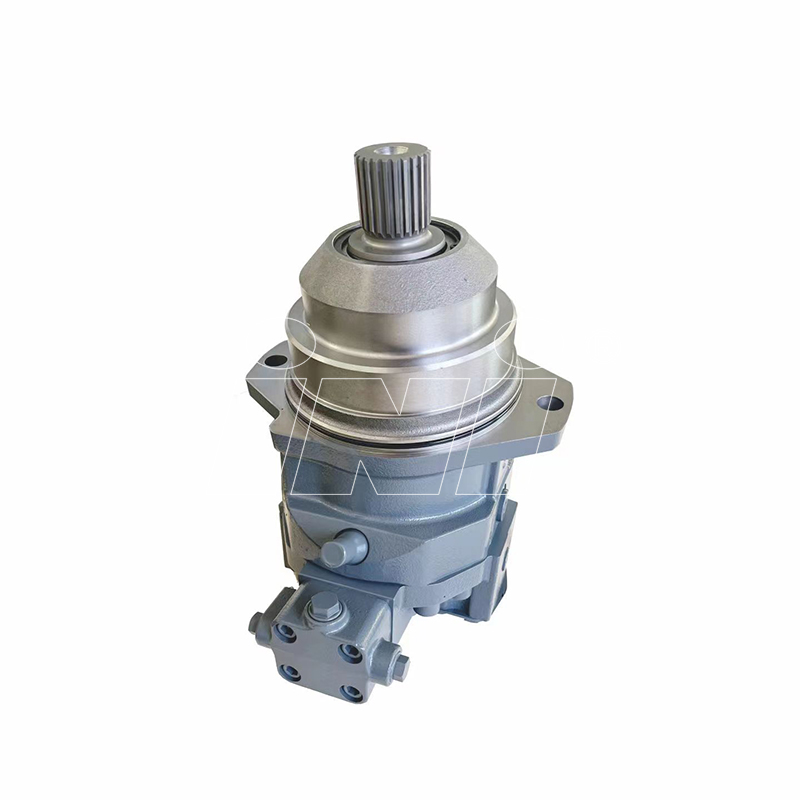
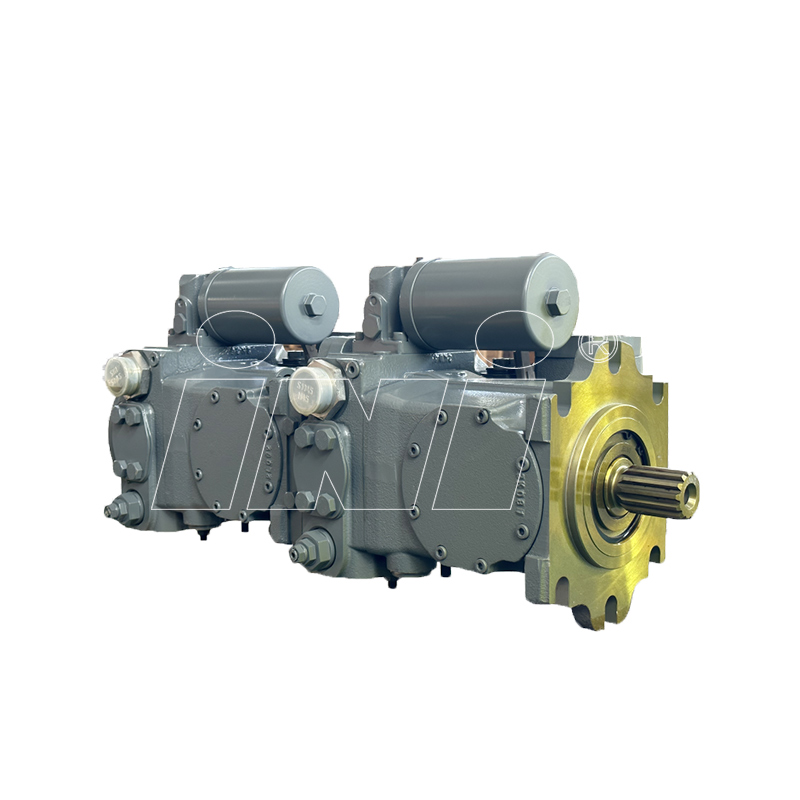
For high-end industrial automation and heavy-duty forging equipment, the Axial Piston Pump is the undisputed king. While the initial investment can be 3x to 5x higher than a gear pump, the long-term ROI is often the highest in the industry due to its unparalleled efficiency and Variable Displacement capabilities.
Energy Savings through Variable Displacement
The defining feature of a premium Industrial Hydraulic Pump in the piston category is the ability to adjust the “Swash Plate” angle. This allows the pump to change its output flow to exactly match the machine’s demand at any given millisecond. By not pumping excess fluid, piston pumps can reduce a factory’s hydraulic energy consumption by up to 40%. In 2026, with the integration of smart sensors and IoT controllers, these pumps can implement “Load Sensing,” essentially paying for themselves through utility bill savings.
Durability and High-Pressure Capability
Piston pumps are engineered for the most demanding environments, capable of handling pressures exceeding 350 bar (5,000+ PSI). Their tight tolerances and high-quality metallurgy allow them to operate at peak efficiency for tens of thousands of hours. However, they require strict oil filtration (must meet ISO 4406 standards). If your facility invests in high-quality filtration alongside a piston pump, the resulting increase in system reliability significantly reduces the “Total Cost of Ownership” (TCO) by preventing unplanned production stops.
4. Comparative ROI Matrix: Which Pump Should You Choose?
To help your procurement team visualize the assessment, the table below compares the standard performance metrics of these three Industrial Hydraulic Pump types for 2026.
| Feature | Gear Pump | Vane Pump | Piston Pump |
|---|---|---|---|
| Initial Cost | Low (Best) | Medium | High |
| Energy Efficiency | Low (~75%) | Medium (~85%) | High (>92%) |
| Max Pressure | Low/Medium | Medium | Ultra-High |
| Noise Level | High | Low (Best) | Medium |
| Contamination Tolerance | High (Best) | Medium | Low |
| Long-term ROI | Good (Low-frequency use) | Excellent (Mid-range) | Superior (24/7 Heavy-duty) |
Summary: The “Best” Choice for Your Facility
- Choose Gear Pumps: If you have a limited budget, low duty cycles, or operate in “dirty” environments where oil purity is hard to maintain.
- Choose Vane Pumps: If you prioritize a quiet factory floor, low-pulsation fluid output, and easy maintenance at moderate pressures.
- Choose Piston Pumps: For high-precision, 24/7 manufacturing where energy savings and high-pressure performance are critical for the bottom line.
FAQ: Industrial Hydraulic Pumps
Q1: What causes a high-pitched whining sound in an industrial hydraulic pump?
A: This is often a sign of Cavitation. It occurs when the intake filter is clogged or there is a leak in the intake line, causing air bubbles to form and collapse in the fluid, which can quickly destroy any type of hydraulic pump.
Q2: Can a piston pump completely replace a gear pump to improve efficiency?
A: Theoretically yes, but it requires evaluation. Piston pumps usually require different mounting brackets and, more importantly, the system needs additional control logic to utilize the variable displacement features.
Q3: How can I extend the life of hydraulic pump seals?
A: Keeping the oil temperature within the normal range (usually below 60°C) is vital. Overheating causes seals to harden and crack. Additionally, using high-quality synthetic hydraulic oil provides better oxidation protection.
References and Industry Standards
- ISO 4409: Hydraulic fluid power — Positive displacement pumps and motors — Methods of testing.
- NFPA (National Fluid Power Association): Energy Efficiency Measurement Guide for Industrial Systems.
- Hydraulics & Pneumatics Review 2025: The Economic Impact of Pump Selection in Modern Smart Factories.
- DIN 24340: Hydraulic valves; Mounting surfaces for high-pressure piston pump systems.

 English
 русский
 Español
 TOP
TOP